
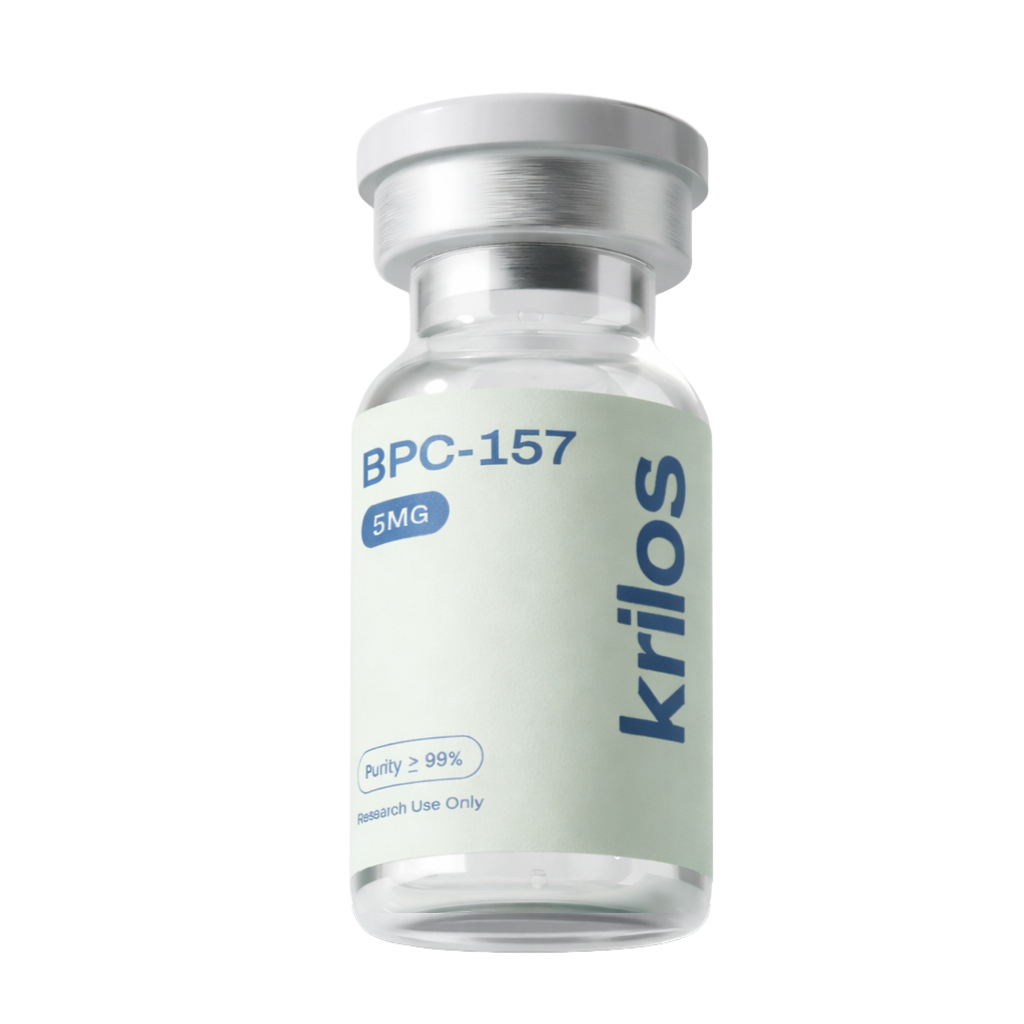
BPC-157

4.6 (141 reviews)
A 15-krilos acid peptide derived from human gastric juice that demonstrates protection and regenerative effects in animal cell models. Premium Research Peptide.

BPC-157

$74.99

A 15-krilos acid peptide derived from human gastric juice that demonstrates protection and regenerative effects in animal cell models. Premium Research Peptide.

SKU: N/A
Free shipping on orders over $150
Secure packaging
Secure checkout 256-bit SSL
Dosage

5MG

Quantity

1 Bottle, 2 Bottles, 3+ Bottles

Reviews

There are no reviews yet.

Be the first to review “BPC-157”

Your email address will not be published. Required fields are marked *

Free shipping on orders over $150
Secure packaging guarantee
Secure checkout 256-bit SSL

How BPC-157 Works

The Science, Simplified

Multi-Pathway Healing Mechanism

BPC-157 works through several interconnected biological pathways that promote healing and tissue repair. It activates various cellular repair mechanisms, promotes blood vessel formation, and modulates inflammation — creating an optimal environment for tissue regeneration.

VEGFR2 Pathway
Vascular Endothelial Growth Factor Receptor 2
Promotes new blood vessel formation
Increases blood flow to injured areas
Activates endothelial cell proliferation
Nitric Oxide System
eNOS/Nitric Oxide Signaling
Dilates blood vessels
Improves oxygen delivery
Protects against ischemia
Growth Factor Pathways
FAK-paxillin, JAK-2, ERK1/2
Enables cell migration to injury sites
Promotes cell survival and growth
Activates tissue repair genes
Nature Scientific Reports – Vascular Mechanism Study
Growth Pathway

GHR Upregulation & Tissue Repair

BPC-157 significantly increases Growth Hormone Receptor (GHR) expression, amplifying the body's natural regenerative signaling. This enhanced GHR activity contributes to accelerated tissue repair and recovery.

Key finding: GHR expression increased 7-fold by day 3 in treated tissue, suggesting BPC-157 primes cells for enhanced growth factor responsiveness.

GHR Expression (Day 3) 7× increase
FAK Phosphorylation ↑ Dose-dependent
Paxillin Activation ↑ Enhanced
Cell Migration ↑ 70% faster
Key Mechanism

VEGFR2-Akt-eNOS Signaling Cascade

BPC-157 activates the VEGFR2 pathway, promoting receptor internalization and downstream signaling. This triggers the Akt-eNOS cascade, increasing nitric oxide production and new blood vessel formation (angiogenesis) at injury sites.

J Mol Med (2017): BPC-157 upregulates VEGFR2 expression, promotes receptor internalization, and activates VEGFR2-Akt-eNOS signaling — accelerating blood flow recovery in ischemic tissue models.

VEGFR2 Expression ↑ Upregulated
Receptor Internalization ↑ Enhanced
Akt Phosphorylation ↑ Time-dependent
eNOS Activation ↑ Increased NO

Frequently Asked Questions

Common questions about BPC-157 research

  • BPC-157 (Body Protection Compound-157) is a synthetic 15-amino acid peptide derived from a larger protein found in human gastric juice. It was discovered during research at the University of Zagreb, Croatia, and has been studied extensively in animal models for its tissue-protective and regenerative properties. The sequence is Gly-Glu-Pro-Pro-Pro-Gly-Lys-Pro-Ala-Asp-Asp-Ala-Gly-Leu-Val.

  • No, BPC-157 is not approved by the FDA or any regulatory agency for human use. It is classified as an unapproved drug. The FDA has issued warnings about BPC-157 being found in compounded products and dietary supplements. Only one Phase 1 clinical trial has been registered, and no Phase 2 or 3 trials have been completed.

  • Preclinical research (animal studies) has shown BPC-157 may accelerate healing of tendons, ligaments, muscles, and bones; protect the gastrointestinal tract from ulcers and inflammation; have neuroprotective effects; and promote blood vessel formation (angiogenesis). However, these findings have not been confirmed in large-scale human clinical trials.

  • In research settings, BPC-157 has been administered via multiple routes: subcutaneous injection, intramuscular injection, intravenous infusion, intraperitoneal injection (in animals), and orally. The compound is remarkably stable in gastric juice for over 24 hours, supporting oral bioavailability. Common research doses range from 10 ng/kg to 10 μg/kg in animal studies.

  • While preclinical studies show no significant toxicity, human safety data is very limited. Key concerns include: lack of FDA approval, unknown long-term effects, theoretical risk of promoting tumor growth due to angiogenic properties, quality control issues with unregulated products, and banned status by WADA since 2022. The compound is not recommended for human use outside of clinical research settings.

  • Lyophilized (powder) form should be stored at -20°C for long-term stability. Once reconstituted, it should be kept at 2-8°C and used within approximately 30 days. The compound demonstrates remarkable stability and can withstand room temperature for short periods. It resists hydrolysis, enzymatic degradation, and even gastric acid.

0
    0
    Your Cart
    Your cart is emptyReturn to Shop
    BPC-157 $74.99
    Scroll to Top