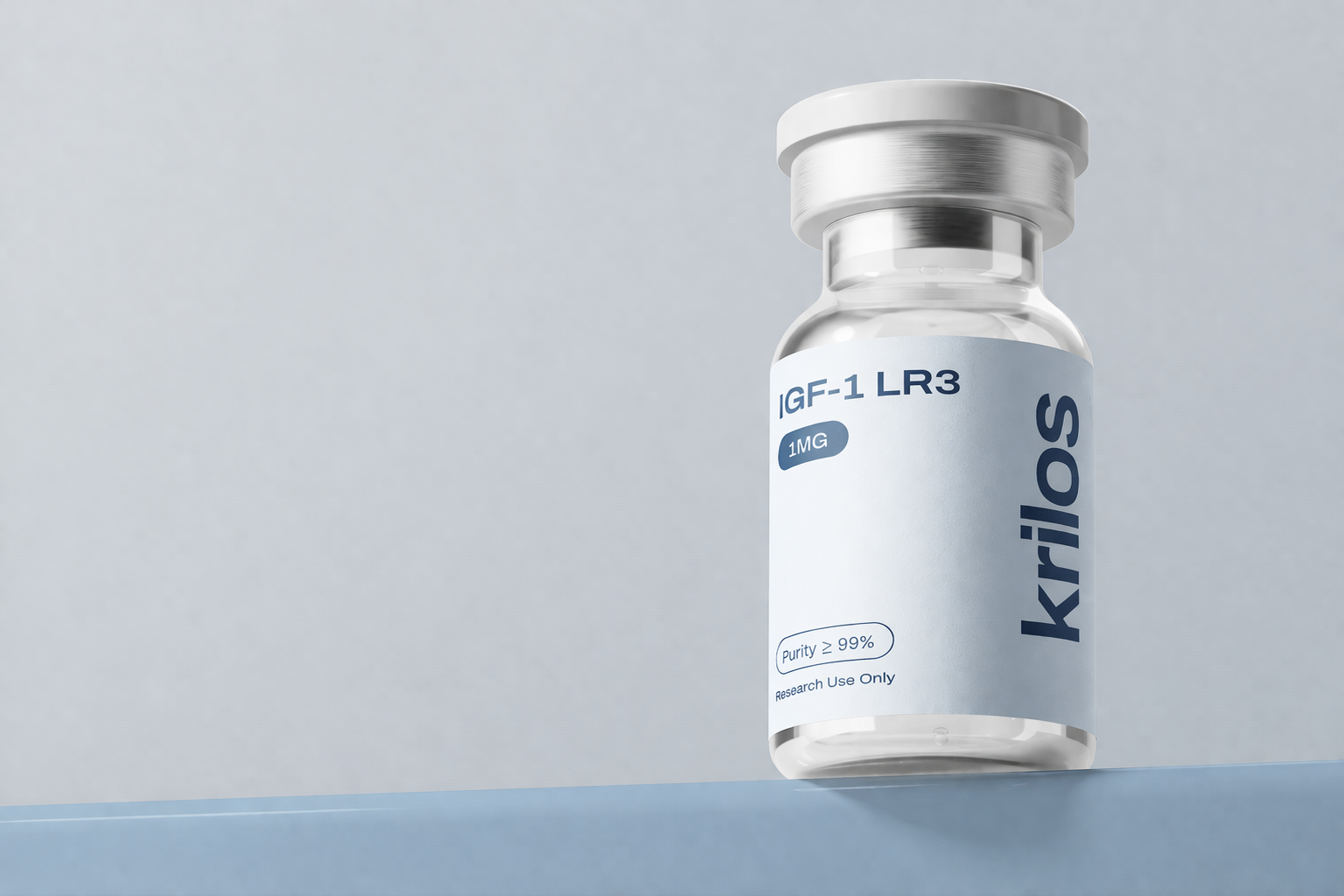
IGF-1 LR3

4.8 (435 reviews)
An 83-krilos acid synthetic analog of human insulin-like growth factor 1 with reduced binding protein affinity and extended half-life, studied for anabolic and tissue growth effects in preclinical research. Premium Research Peptide.

IGF-1 LR3

$219.99

An 83-krilos acid synthetic analog of human insulin-like growth factor 1 with reduced binding protein affinity and extended half-life, studied for anabolic and tissue growth effects in preclinical research. Premium Research Peptide.

SKU: N/A
Free shipping on orders over $150
Secure packaging
Secure checkout 256-bit SSL
Dosage

1MG

Quantity

1 Bottle, 2 Bottles, 3+ Bottles

Reviews

There are no reviews yet.

Be the first to review “IGF-1 LR3”

Your email address will not be published. Required fields are marked *

Free shipping on orders over $150
Secure packaging guarantee
Secure checkout 256-bit SSL

How IGF-1 LR3 Works

Enhanced Growth Factor Signaling

Modified for Maximum Bioactivity

IGF-1 LR3 is a synthetic analog of human insulin-like growth factor 1 with two key modifications: an arginine substitution at position 3 (instead of glutamic acid) and an additional 13 residues at the N-terminus. These changes reduce binding to IGF-binding proteins (IGFBPs) while maintaining full agonist activity at the IGF-1 receptor, resulting in enhanced potency and prolonged half-life.

IGF-1 Receptor
Insulin-like Growth Factor 1 Receptor
Activates PI3K/Akt signaling
Stimulates mTOR pathway
Promotes protein synthesis
Reduced IGFBP Binding
Insulin-like Growth Factor Binding Proteins
Bypasses sequestration
Increased free fraction
Extended duration of action
Downstream Signaling
Protein Kinase B / Mammalian Target of Rapamycin
Protein synthesis activation
Cell proliferation and growth
Anti-apoptotic signaling
Tomas et al., J Endocrinol 1996
Key Modification

Why the N-Terminal Extension Matters

Native IGF-1 is rapidly sequestered by six different IGF-binding proteins (IGFBP-1 through 6), which regulate its bioavailability. The 13-residue N-terminal extension in IGF-1 LR3 dramatically reduces this binding, allowing more free peptide to reach target tissues.

Result: IGF-1 LR3 retains full pharmacological activity at the IGF-1 receptor while having very low affinity for IGFBPs. This translates to approximately 3-fold greater potency and a half-life of 20–30 hours (vs 12–15 hours for native IGF-1).
Native IGF-1 residues 70
IGF-1 LR3 residues 83
Native IGF-1 half-life ~12–15 hours
IGF-1 LR3 half-life ~20–30 hours
IGFBP Evasion

Bypassing the Regulatory System

In circulation, IGFBPs bind and sequester native IGF-1, limiting its bioavailability. LR3 modification allows the peptide to bypass this regulation.

Clinical significance: Because IGF-1 LR3 is not sequestered by binding proteins, a greater proportion of the administered dose remains bioactive. This is why it demonstrates 2.5–3× greater potency in preclinical models despite binding to the IGF-1 receptor with similar affinity.

Frequently Asked Questions

Common questions about IGF-1 LR3 research

  • IGF-1 LR3 differs from native IGF-1 in two key ways: it has an arginine instead of glutamic acid at position 3, and it has an additional 13 residues (MFPAMPLLSLFVN) at the N-terminus, for a total of 83 residues versus 70 for native IGF-1. These modifications dramatically reduce binding to the six IGF-binding proteins (IGFBPs) while maintaining full agonist activity at the IGF-1 receptor. The result is approximately 3-fold greater potency and an extended half-life of 20–30 hours (vs 12–15 hours for native IGF-1).

  • In circulation, IGFBPs bind and sequester native IGF-1, limiting the amount of free/bioactive peptide available to activate IGF-1 receptors. By reducing IGFBP binding, IGF-1 LR3 remains bioactive longer and a greater proportion of the administered dose reaches target tissues. Studies show that continuous infusion of IGF-1 LR3 was 1.5–2 fold more potent than native IGF-1 for effects on body weight, organ weights, and feed efficiency in animal models.

  • No. All available research on IGF-1 LR3 comes from preclinical animal studies, primarily in rats. No human clinical trials have been conducted to establish safety, efficacy, or appropriate dosing in humans. The compound remains strictly a research tool and is not approved for human use by any regulatory agency.

  • In dexamethasone-induced catabolic rats, IGF-1 LR3 was approximately 2.5-fold more potent than native IGF-1 in reversing weight loss and preserving nitrogen balance. The highest dose produced a 6g body weight increase over 7 days (compared to 19g loss in untreated controls). It also increased gut weight by up to 45% and reduced 3-methylhistidine excretion (a protein breakdown marker) by 3-fold more than native IGF-1.

  • Yes. IGF-1 LR3 is listed on the World Anti-Doping Agency (WADA) Prohibited List under category S2 (Peptide Hormones, Growth Factors, Related Substances, and Mimetics). It is prohibited both in-competition and out-of-competition in all sports. Athletes subject to drug testing should be aware that use of this compound will result in a positive test and potential sanctions.

  • Like most peptides, IGF-1 LR3 in lyophilized (powder) form should be stored at 2–8°C (refrigerated) or -20°C (frozen) for long-term storage. Once reconstituted with bacteriostatic water, it should be kept refrigerated and used within 2–4 weeks. Avoid repeated freeze-thaw cycles and protect from light.

  • While human safety data is lacking, potential risks based on IGF-1 biology and animal observations include: hypoglycemia (low blood sugar due to insulin-like effects), organ hypertrophy (particularly gut, spleen, kidneys), fluid retention, and theoretical concerns about promoting cancer cell growth. Because IGF-1 LR3 is 2.5–3× more potent than native IGF-1, these effects may be amplified. No long-term safety data exists.

0
    0
    Your Cart
    Your cart is emptyReturn to Shop
    IGF-1 LR3 $219.99
    Scroll to Top