
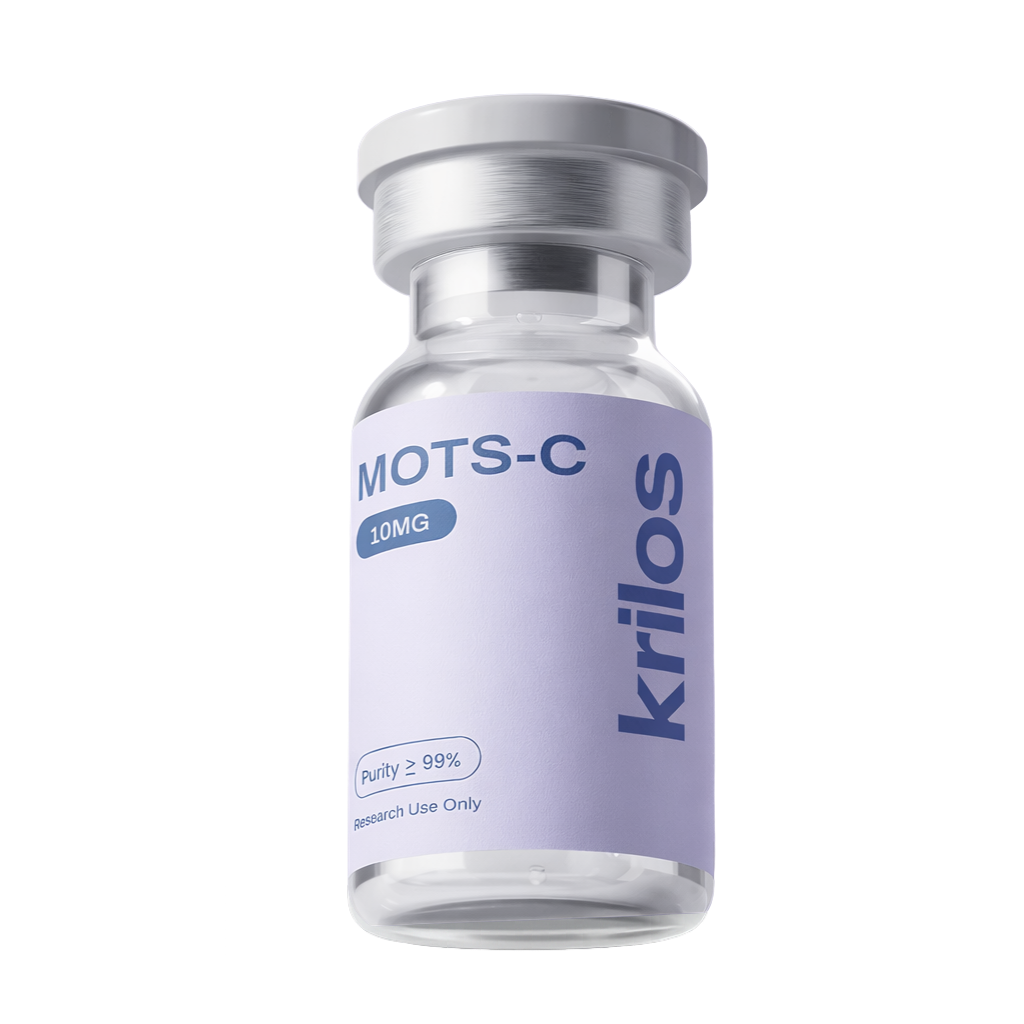
Cognitive Research, Longevity Research, Recovery Research, Skin & Anti-Aging Research, Sleep Research

MOTS-C

4.5 (545 reviews)
Cognitive Research Longevity Research Recovery Research Skin & Anti-Aging Research Sleep Research
A mitochondrial-derived peptide that modulates metabolic processes, with significant implications for exercise metabolism observed in rodent studies. Premium Research Peptide.

, , , ,

MOTS-C

$59.99

A mitochondrial-derived peptide that modulates metabolic processes, with significant implications for exercise metabolism observed in rodent studies. Premium Research Peptide.

Free shipping on orders over $150
Secure packaging
Secure checkout 256-bit SSL
Dosage

10MG

Quantity

1 Bottle, 2 Bottles, 3+ Bottles

Reviews

There are no reviews yet.

Be the first to review “MOTS-C”

Your email address will not be published. Required fields are marked *

Free shipping on orders over $150
Secure packaging guarantee
Secure checkout 256-bit SSL

How MOTS-c Works

The Science, Simplified

Exercise in a Molecule

MOTS-c is a 16-Peaked acid peptide encoded in the mitochondrial genome. When released, it travels to skeletal muscle where it activates AMPK — the same master metabolic switch triggered by exercise. This leads to improved glucose uptake, enhanced fat burning, and better insulin sensitivity without actual physical activity.

Folate-AICAR-AMPK Pathway
AMP-Activated Protein Kinase
Increases glucose uptake
Enhances fatty acid oxidation
Improves insulin sensitivity
Nuclear Translocation
Nuclear Gene Regulation
Regulates stress response genes
Promotes metabolic adaptation
Enhances cellular resilience
NAD+/SIRT1 Pathway
Sirtuin 1 Signaling
Increases NAD+ levels
Activates longevity genes
Enhances mitochondrial function
Lee et al., Cell Metabolism 2015
Longevity Research

Anti-Aging Potential

Endogenous MOTS-c levels decline with age, and supplementation in aged mice restored youthful metabolic function and physical performance.

Lifespan extension: Mice treated with MOTS-c starting at 23.5 months showed a 6.4% increase in median lifespan and 7% increase in maximum lifespan, suggesting rejuvenating effects.

Key Mechanism

Why It Mimics Exercise

MOTS-c is naturally released from muscles during exercise. When given exogenously, it replicates the metabolic benefits of physical activity by activating the same AMPK-dependent pathways.

Exercise response: In healthy young men, a single bout of exercise increased skeletal muscle MOTS-c levels 11.9-fold and plasma levels 1.6-fold, demonstrating its role as an exercise-induced hormone.

Muscle MOTS-c (post-exercise) ↑ 11.9×
Plasma MOTS-c (post-exercise) ↑ 1.6×
MOTS-c levels (age 70-81) ↓ ~21%
MOTS-c in obese subjects ↓ ~16%

Frequently Asked Questions

Common questions about MOTS-c research

  • MOTS-c (Mitochondrial ORF of the 12S rRNA type-c) is a 16-Peaked acid peptide encoded within the mitochondrial genome, specifically in a short open reading frame within the 12S ribosomal RNA gene. It was discovered in 2015 by Dr. Pinchas Cohen at the University of Southern California. Unlike nuclear-encoded peptides, MOTS-c is one of the few known bioactive peptides produced by mitochondrial DNA.

  • MOTS-c is naturally produced and released from skeletal muscle during exercise — levels increase 11.9-fold in muscle after a bout of exercise. When administered exogenously, it activates the same AMPK signaling pathways triggered by physical activity, leading to improved glucose uptake, enhanced fat oxidation, and better insulin sensitivity without actual exercise. In aged mice, MOTS-c treatment doubled running time and increased running distance 2.16-fold.

  • MOTS-c itself has not been tested in formal human clinical trials. However, CohBar developed a MOTS-c peptide analog called CB4211, which completed Phase 1a trials in healthy adults and demonstrated safety and tolerability after 7 days of dosing. CB4211 is currently in Phase 1b trials for the treatment of obesity and non-alcoholic fatty liver disease (NAFLD). The trial expects to measure effects on liver fat, body weight, and metabolic biomarkers.

  • Endogenous MOTS-c levels decline with age — by ages 70-81, levels in skeletal muscle are approximately 21% lower than in young adults. Preclinical studies showed that MOTS-c supplementation in elderly mice (starting at 23.5 months) improved physical performance, restored youthful metabolic function, and showed a trend toward increased lifespan (6.4% median, 7% maximum lifespan extension). MOTS-c appears to rejuvenate aging phenotypes across multiple tissues.

  • Preclinical data suggests a favorable safety profile with no serious adverse events. The analog CB4211 was safe and well-tolerated in human Phase 1a trials. Potential side effects based on limited data include temporary fatigue, mild nausea, and headaches. MOTS-c primarily activates AMPK, similar to metformin, and may interact with other AMPK-activating drugs. Long-term safety in humans has not been established.

  • MOTS-c is extremely temperature-sensitive and unstable. At room temperature, peptide levels can decrease by 85-90% within 2-3 hours. Even at 4°C, levels decrease by one-quarter after 24 hours. For this reason, MOTS-c should be stored frozen as a lyophilized powder and reconstituted immediately before use. This instability also makes measuring endogenous MOTS-c levels challenging in clinical settings.

  • MOTS-c is not approved for human use by the FDA or any regulatory agency — it remains a research compound only. It is prohibited by the World Anti-Doping Agency (WADA) and is listed as a performance-enhancing substance. Athletes have been known to use MOTS-c illegally, and detection methods using LC/MS have been developed to identify MOTS-c and its metabolites in doping control.

0
    0
    Your Cart
    Your cart is emptyReturn to Shop
    MOTS-C $59.99
    Scroll to Top